Showing posts with label China. Show all posts

Thursday, February 17, 2022

Freedom Index©

 Freedom Index©


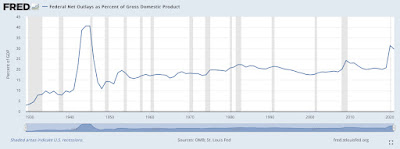
The Freedom Index© is the inverse ratio of the percentage of GDP spent on government annually. Currently the reading is somewhere between 45-70% of your God-given freedoms, depending on where you live in the United States. No wonder Elon Musk is fighting the SEC.

It is a sad state of affairs when the Thomas Edison of our generation has to SUE his own government for chilling his basic civil rights. Instead of unleashing innovation, the Biden Administration has made a point of trying to crush it. How did we get here?

There has been a steady decline in basic civil rights for over a century, and it can be tied directly to the rise of the Income Tax and IRS. Once the government gained the power to tax it never stopped, because your tax dollars are its nutrients for growth. Hence we have witnessed a stunning growth in the size and scope of the government. Consider the historical chart below:


The Federal Government spend now is over 30% of our GDP. Combine that with State and Local spend and we're easily approaching 50%+. Why does that matter? Well as government grows, your freedoms erode. Sadly, the Founders knew this would happen. That is why they kept government small, knowing that it is inherently corrupt. Consider, since 1930 when Fed Spend was about 5%, you had essentially 95% of your freedom. Now it is less than half. And in many states like California it is worse. "The State" has become all.

Can this be fixed? That is a difficult question. President Reagan famously once said: "The closest thing to eternal life on earth is a Government Program." How true it is. Much of the problem lies with our elected representatives who do not represent us. They represent themselves and their lust for power. Change begins with voting them out, demanding term limits, and creating a task force to reduce regulations and simplify taxation. Yes, a task force to REDUCE government. We should not be the best country for political corruption and accountants, but rather for engineers, scientists, and poets.
 

Thursday, January 20, 2022

Crimea 2.0

 Crimea 2.0


Eight short years ago we were just wrapping up the Winter Olympics when Russia invaded Ukraine and seized the Crimea. President Obama did nothing. The milquetoast response of "sanctions" were roundly brushed off by the Russians. The situation in the Ukraine today feels like Crimea 2.0. Does the European Union, NATO, or the United States have the backbone to prevent war? Probably not.

Investors ignore situations like this at their own peril; students of history are well aware of how the Balkans helped launch World War I with the assassination of Archduke Ferdinand. This catalyst caused a domino effect nearly 100 years ago. It isn't a far conjecture to see the chess board set-up quickly in 2022 as an early decisive move seems eminent. Frankly, it baffles the mind of this Western pro-democracy supporter of how the entirety of Western Europe and the United States is yet caught on their heels yet again as a Russian Military force effectively dictates the battlespace.

The most likely result will be further solidification of Ukrainian sovereign land into the Russian Federation. If recent history is any indicator, neither the rhetoric or economic sanctions proposed by Western Europe or the United States will have any stopping power. The Ukraine may in its entirety fall under Russian control. There is a strong possibility given the spineless response from the West that Ukraine could even be taken without a shot. Why? Simply put, Western Europe needs Russia more than Russia needs Western Europe; Russia supplies over a third of all power to Western Europe in the form of its natural gas and oil pipelines. This does not bode well for Ukraine.

Obviously this possible invasion is a serious problem for democracy in Ukraine, but it also further establishes a terrible precedent of a U.S. and Western Europe malaise and unpreparedness. Neither are good traits agains a Russia that is clearly capable of immediate action. Investors take note; the Russian Federation is proudly wearing their laurels as we sit on ours. Besides the clear violation of Ukrainian sovereignty, the very real possibility of further unimpeded annexation exists, all the while the West conducts meetings on what to do that should have occurred years ago.

Raising some cash here probably isn't a bad idea, and it is hard to believe that both the energy and gold markets won't express their concerns. Natural gas in particular looks like it is held in the crosshairs.  Watch this situation closely, obscure maneuvers in far-off lands often ultimately have dire global results. Putin knows he's playing chess with a pigeon, and Xi will feel emboldened to take Taiwan after the Olympics this year as his "Gold Medal" on the world stage if the West does nothing (again) in Ukraine.


Sunday, February 21, 2021

A Bitcoin for Your Thoughts?

 A Bitcoin for Your Thoughts?


I am not a crypto fan for a variety of reasons; for one it feels like a pure Ponzi scheme, for another it has no ties to a physical commodity (think gold standard), and it can be seized electronically at will by almost any major government...but there is one trait that is very, very interesting about Bitcoin: The IRS wants to know on your 2020 1040 "At any time during 2020, did you receive, sell, send, exchange, or otherwise acquire any financial interest in any virtual currency?" Unfurl the red flags.

Why does the Deep State want to know whether you have virtual currency? Well dear readers, taxation is a by product of any benefit. This first example of this phenomenon in the United States sparked the Whiskey Rebellion in 1791. Whiskey had become a store of value; tilled fields planted with rye ultimately harvested and distilled into whiskey became in many respects this country's first portable, stable, and universal currency. Naturally the government wanted to tax this store of value. Hence the brewing discontentment which resulted in the Whiskey Rebellion.

Ultimately a paper currency was introduced which was backed by silver and gold; this metallic standard lasted well into the 20th century until under the Nixon administration the gold standard was revoked in order to pay for the escalating costs of the Vietnam War. The result was disastrous for working Americans as their purchasing power collapsed and inflation raged. The amount of paper currency, fiat money, in circulation exploded.

Gold has been a universal store of value for over 5,000 years...maybe even longer. "God's money" gets its value from the toil required to obtain it; gold is rare, it cannot be made by man, it is portable, and it looks really cool too! Almost every civilization that had some access to gold made it the backbone of their civilization's economy; even today vast hordes of gold are stored by central banks around the world.

Virtual currency offers central bankers even more of an advantage over paper money; not only can a limitless supply be created, but it can be tracked, seized, and controlled with ever more sophisticated means; virtual currency is big data's dream scenario...information about consumers can be collected en masse and interesting scenarios develop such as migration patterns, spending habits, and legal status.

As adoption becomes mainstream, the question arises with a theoretical limit of 21,000,000 (21M) Bitcoin how high in USD can it possibly go? An investing analogy to the Great Tulip Bubble was that during peak mania, a single bulb could purchase a house...so assume a nice house and we're talking about possibly $1M. Tulip mania did not end well, and I suspect Bitcoin will also end poorly.
If paper currency is just fiat money, tulips are just flowers, and Bitcoin is potentially a Ponzi scheme what is an investor to do? Felix Zulauf from this week's Barron's had a very interesting take: "Millennials are buying Bitcoin instead of gold...I don't believe that Bitcoin will ever make it as money used in daily payments. It is too complicated, the price is too volatile, and "mining" it requires too much energy. But as long as people think Bitcoin as a safe store of value, the price could go higher, and it could become a mania."

Finally, as Steve Jobs famously used to end his product launches..."one more thing." Research indicates that Bitcoin is an environmental disaster given the amount of energy resources it consumes to "mine" the virtual currency and where does some 20% of the world's Bitcoin mining take place? China's Xinjiang region, "where the U.S. government says a genocide is occurring."

A possible solution? Let's get back online with the gold standard by digitizing gold. I hope the next craze in virtual currency is GoldCoin.


Monday, January 4, 2021

Where is Jack Ma?

 Where is Jack Ma?


Is Jack Ma still alive? After voicing criticism over China's financial sector, the wildly successful billionaire hasn't been seen in public for over 2 months now. Some wonder whether he is still alive. Many wonder what Chairman Xi has done with this man...Jack Ma has "gone missing."

As China projects its hegemony across the globe, it has become quite apparent that speaking against "the State" is grounds for termination. And if they can do this to a billionaire, well imagine what's really going on behind the scenes. Fang Fang was recalled after her cover as a handler was blown. Hundreds of "grad students" with access to cutting edge research at our top universities simply board a plane and are never heard from again.

An interesting corollary to Jack Ma's disappearance is the disappearance of Chinese stocks on U.S. stock exchanges. The Trump Administration's final days are being spent shoring up American exchanges from Chinese corporations with questionable financial ties, money laundering, and corruption. Parts of the FBI still seem to care...other parts seemed completely compromised. The "President-Elect" has financial ties to China that are troubling to say the least. Condon's "The Manchurian Candidate" quickly comes to mind.

Almost any global tech exec will give you an earful of the trade stipulations China has put on the sector; namely originators, inventors, and makers of technology are required (yes you read that correctly) to provide their Chinese "partners" with the necessary IP to industrialize China. The rust belt is testament to what happens on a large scale when this is employed; machines go first, then their operators aren't far behind. Silicon Valley should wake up to this reality, but I fear the greed is blinding right now.

What would it take for an American billionaire to be "disappeared?" That is an interesting question. It happened to Carlos Ghosn when he landed in Japan. It seem reasonable that the average billionaire might be "disappeared" off a yacht in the Med at any given time. Civil rights seem to disappear when you leave the United States and step foot on foreign land. Even in the United States now, billionaires are hedging their bets by championing the policies of the ruling elite. I guess you can never be too careful.

Why has Jack Ma "gone missing?" Linked is Jack Ma's Bund Finance Summit Speech, it may have cost him his life. Freedom is never free my friends.


Friday, March 20, 2020

Bioterrorism

Bioterrorism


The Wuhan coronavirus (COVID-19) will go down as one of the most effective acts of bioterrorism in history. If you want to destroy global capitalism and democracy, viruses are the ultimate Trojan Horse. Viruses destroy the very fabric of an open society by concentrating power in the hands of a few to make vast economic, societal, and political decisions without a single vote. Basic freedoms, like movement, are restricted.

Viruses are especially dangerous in countries that value human life highly because those countries are willing devote almost limitless resources to testing, treating, and caring for all segments of their society, especially the most vulnerable. If you want to take down a democratic society, a viral pandemic is an extremely effective agent to accomplish that goal.

Whether accidental or strategic, the results of the WuFlu have been dramatic; from an economic and social impact its devastation is global in scale on par with a World War. The story of "the Wuhan," however, starts not in November or December of 2019, but rather several decades before, when the seeds of destruction were first sown with something so seemingly benign as counterfeit goods.

The New York Times has an excellent article entitled "The Chinese Roots of Italy's Far-Right Rage" that helps frame the current disaster in terms of product theft, industry destruction, and ultimately killing of the former residents. In summary, the article details the initial theft of hundreds of Italian textile brands (linen, shoes, clothing, etc.) by visiting "tourists" who took pictures of all the products and factories while in Milan, then subsequently began making identical copies in the 1980s. The result was a flooding in the market of counterfeit goods. These goods led to the destruction of the industry because the Italian factories had a higher cost of goods for raw materials and labor; the authentic Italian goods, however, couldn't survive against their inferior clones despite the value difference in quality. 

In the decades that followed, Italian factories were systematically purchased by Chinese Nationals who brought over their own family and friends thus displacing generations of Italian families. While the New York Times story was written specifically about the Italian fashion industry, it applies generally to nearly every industry in every country with particular emphasis on manufacturing and pharmaceuticals. If there was a branded successful product, the strategy over the past 40 years has been to clone it, sell it, and capture the industry. In recent years this has been prevalent noticeably in software platforms.

Over the past 40 years global manufacturing has largely moved offshore. Coronavirus is simply the icing on the cake; not only have the products, jobs, and industry been destroyed, but the very residents of those areas are now being killed. The coronavirus pandemic is the final indication of what has happened to democratic Western Society since globalism has pushed industry to embrace "free trade" agreements like NAFTA...cheap goods and executive comp were the costs of losing a nation's self-reliance.

In times of crisis, allies evaporate, borders close, and citizens are left wondering why a country isn't self-sufficient. Fear, panic, and hate are not going to be the answers in the weeks and months ahead that will make this country stronger. Rather, it will be the collective awakening of our society, especially amongst GenX, of the need to seek greater political power and rapidly ween the United States off of dependence on foreign manufacturing; we have an abundance of God-given resources in this country capable of making the USA self-sustainable. A "New New Deal" should be a sustainability movement laser-focused on repatriation of industry. "Made in the USA" means a lot.

Saturday, March 14, 2020

Demand Shock

Demand Shock


The United States of America has entered a period of severe negative demand shock. Negative demand shock occurs when demand collapses across multiple economic sectors simultaneously. As the Wuhan coronavirus has spread in this country it has triggered a panic not seen in the stock market since 1987...and it presumably will last significantly longer. Much longer. Think 1929ish.

Entire industries have been laid low, namely: airlines, cruise lines, hotels, casinos, restaurants, sporting events, and education to name a few. There undoubtedly will be secondary and tertiary impacts such as the hundreds of thousands of small business that cater to these industries as well as the millions of employees whose livelihoods are intricately woven into supply/demand chain of our economy.

From an economic standpoint, Wuhan coronavirus has most likely triggered a recession. It is hard to conceive of our economy, which is 70% consumer-dependent, bouncing back from the Wuhan coronavirus quickly, especially since there will be many lingering concerns in regards to travel, safety, and trust.

The path forward is an arduous one. First, large segments of the American population will be exposed to the Wuhan coronavirus. Second, many Americans will undoubtedly be infected with this disease, with victims typically being the elderly and/or those with underlying medical conditions. Our most vulnerable. Third, it's not going away quickly.

Self-quarantine time alone is running at a minimum of 2 weeks, but there are staggered results popping up all over the country. What I mean by this is that another cluster might easily pop up in a month, or 2 months, or even next year. Wuhan coronavirus is the proverbial "whack-a-mole" scenario.

What does this all mean? Based on the existing infection rate it is probable that many millions of Americans will be infected with the Wuhan coronavirus and thousands will die. As America is a country that values life highly, this will have severe economic and social ripple effects; demand shock is the most obvious initial wave. Another rational wave is going to be societal push-back against viral originators responsible for deaths and economic destruction. Human nature is what it is. As previously stated, it is highly likely we entered a recession last week. We definitely entered a bear market. 

What's an investor to do? Price discovery has significantly altered the trading prices of many stocks, especially in the most affected sectors such as airlines, cruise lines, oil, etc. to name a few. Given that nobody really knows when the Wuhan coronavirus will be contained, it is important to focus on sustainability and that usually translates to quality of balance sheet and earnings.

There are many industries that do not seem sustainable if all of their demand collapses. I would avoid them. Survivors? There will be many survivors, namely in the food and beverage industries, many of which are actually experiencing tremendous demand. I like those sectors. Finally, there are some sectors (like tech) that have extremely large installed userbases which don't disappear overnight and given quarantine conditions might add to their installed userbases. I like those as well.

In times of uncertainty, having cash is a good thing; you might miss out on a quick turn of events and maybe not capture all of the upside, but when survival is on the line it is better to survive. Ultimately the Wuhan coronavirus will be contained at some level. The jury is still out on what level. Until that time it makes a lot of sense to focus on quality cash flow and survivability.

Tuesday, February 25, 2020

Coronavirus

Coronavirus


Global pandemics, real or perceived, have a nasty habit of rattling investors out of solid, long-term investment strategies; historically, however, within a six-month period, the stock market usually recovers ALL of its initial losses PLUS tacks on additional GAINS.

The trillion-dollar question though, is whether "this time" things will be different. Do we have the global health infrastructure and political will as well as decisiveness of fiscal leaders (I'm talking to you Federal Reserve) to mitigate the Coronavirus? I believe we do.

Although China has been criticized for acting too slowly, when they finally did act to contain the coronavirus, the Chinese didn't fool around; they went into full lockdown with a population zone size in the hundreds of millions. Of course several thousand or perhaps even hundreds of thousands of infected individuals had already left the country, which leads us to the current situation of initially small pockets of infection popping up all over the world. As we have become an increasingly interconnected world, literally within weeks travelers from almost anywhere in the world can go anywhere in the world. What used to take years now happens in weeks.

Now we're playing a global game of "whack-a-mole" while simultaneously trying to develop a vaccine. There are several advantages we currently enjoy over the virus, mainly due to panic and luck; reporting of new cases is broadcast over social media almost instantaneously, we "kinda" have a plan in place in nearly every pocket of the world to isolate and contain, and thankfully the fatality rate seems lower than comparable respiratory infections. That's the good news.

The bad news? The three weeks of lag time in shutting down the Chinese flight from Wuhan probably increased by one or perhaps even two orders of magnitude the GLOBAL impact of the spread. Also, keep in mind, China itself has largely slowed economically...many, many manufacturing operations have ceased. Consumption inside China, save for food, beverages, and the internet have largely collapsed. In terms of a baseball analogy, China is probably in the 5th or 6th inning in terms of containment/eradication while the rest of the world might be in the 3rd inning. A lot is going to depend on how many other clusters of coronavirus pop up, how those are contained, and also whether a vaccine can be developed in a safe and timely manner. A big wild card is whether the virus mutates.

For an interesting, and quite scary, historical perspective the Spanish Flu ranks probably second only to the Plague in terms of total human deaths. It ravished almost all of the known world over a period of several years (1918-1920). It literally went to almost every single patch of Earth where humans lived, particularly devastating remote island communities once it arrived there. It changed the fabric of human civilization in the 20th Century. Yet there were a handful of places it never arrived simply from the absolute remoteness of the places. Check out the hyperlink above to learn more...it is a fascinating story of viral infection, spread, and ultimate containment.

What's the average investor to do? Don't get rattled out of your long-term plan. If history is any indicator, there might even be some excellent buying opportunities in the weeks ahead!


Tuesday, November 7, 2017

Serfdom


By 2020 the United States population is estimated to reach 340 million, but of that total some 300 million people will effectively be serfs; low-income, low-wealth members of a caste with limited social mobility. It will be nearly impossible to escape serfdom as wealth permanently consolidates amongst the richest ~10% of the population.

How do you avoid becoming a serf? Landowners from medieval times to now have fared well; the "lord of the manor" typically doesn't wind up becoming a serf, although it can happen if land ownership rights are abolished (think Soviet Union or China during their respective communist purges of the 20th century.) Education is key. Owning assets (cashflow positive) is vital.

Recently hedge fund billionaire Ray Dalio has identified this disturbing trend as being the result of two distinct economies in the United States; he is 100% right, but miserably late to identifying something that this blog pinpointed years ago. Mr. Dalio, however, is the lone billionaire voice this author has read even remotely advocating for a wealth transfer to protect the social order. Don't bet on it though, as hearty readers of this blog know, the Forbes 400 control vast amounts of global wealth disproportionate to their net value to the world...and along with that they control the politicians and media outlets. Make no doubt, the game is stacked.

The simple solution is to retroactively establish equity accounts for USA citizens composed of common stock transferred from ultra high net-worth individuals (say net worths of $500M+ are getting a hair cut.) Think of this as TRUE Social Security: shares in Google, Microsoft, Apple, Amazon, Facebook, Berkshire Hathaway, etc. are transferred into a retirement savings account for every USA citizen. The very companies that have been allowed to establish monopolistic businesses in the United States (and often globally) help restore the Middle Class. I think voters would be a lot more excited about $100,000 appearing in a bona fide personal retirement account than a measly $1300 tax savings proposal.

Under the guise of philanthropy many billionaires are stashing their stock in non-profits, which allow them to maintain control (or their heirs) with beneficial tax treatment (read: no taxes). This does little to benefit the Middle Class from which these billions are siphoned. A strong Middle Class is good for everyone, even the ultra rich.

But real farmers don't complain, and that's not what this blog is all about...so discard the idea of wealth transfer and instead think about wealth creation and protection. Wealth creation is the product of owning assets that are cash flow positive, beneficial tax treatment, and protection of said ownership interests. The future isn't going to belong only to those who can code, but also those who can secure a solid asset base composed of real estate, equities, and education. Seek these out for yourself and the ones you love, because the monopolies grow stronger by the day.


Friday, January 8, 2016

Red Monkey

Year of the Red Monkey


2016 is the Year of the Red Monkey in the Chinese Zodiac. It has been a fitting start to the year already, although the festivities officially don't start until February 8th this year for the Chinese. The "festivities" for the rest of us have already started with the lowest stock market start ever. Ever!

There are three fundamental problems driving the market lower; excessive valuation of Chinese equities/currency, oil, and the Fed's decision to begin a tightening cycle in the midst of a global rout.

The first problem is going to take as much time as needed to unwind given the use of circuit breakers, forced market closures, and limiting of sales. We've seen this many, many times in U.S. markets over hundreds of years; if you prevent sellers from selling it just promotes more selling. Water, and sellers, will always seek their own level. It is futile to prevent sellers from selling and simply exacerbates the problem.

The yuan is in the same boat; it too should be allowed to float freely without artificial influence. The "Chinese situation" may make take months if not the entire year to resolve itself. Expect the selling (and pain) to continue until legitimate market conditions return. A good entry point for investors looking to put money to work in China? When a stock trades at an option price that sounds good for me, i.e. no more than a couple bucks a share for a GAAP-monopoly stock. Even then assume you'll lose it all. Moral? Stay in the USA.

Second, the price of oil is great for consumers. Even in California, the country's 3rd largest producer behind Texas and Alaska, which has the highest gas prices in the country, gas is cheap. (As an aside, where is that extra buck per gallon at the pump going? It flows through the biggest unnatural pipeline of them all, which had no trouble being built: from your wallet to Sacramento.)

The existing oil slump should fuel further light and heavy truck sales keeping the rally alive in autos and additional savings have shown to be funneled directly into consumers pockets for their discretionary purchasing choices. It is undoubtedly a stealth tax cut; enjoy it while it lasts!

The underside of this oil barrel, however, is the complete and utter devastation to many of the small and mid-cap producers who had ramped up production at high oil prices only to see their investments crater during the oil rout. $35 oil is here, $25 oil is in sight. With supply at all-time highs and demand flat expect this environment to continue for the foreseeable future.

Finally, with little to no inflation, the Fed decided it was time to act. Not acting would have somehow caused them all to look ineffectual so it was apparently better to jack up the Fed Funds rate rather than promulgate any doubts about their resolve. Buying equities into a rising Fed environment has not been healthy for investors; expect them to continue raising anywhere from 2 to 4 more times in 1/4 point intervals until the stock market is sufficiently punished. Naturally, new home starts and existing home sales will fall. Mortgage rates have already begun to creep up. If it quacks like a duck and walks like a duck, it must be 1937 all over again.

In spite of all these headwinds, I expect 2016 to end well with the Dow reaching 20,000 by Dec. 31, 2016. Why in the world do I expect this? A crappy 2015, massive bearish sentiment into 2016, and  healthy corporate balance sheets are streaming money back to investors, buying back their own shares, and consolidating via mergers into greater and greater monopolies. This should lead to pricing power and ultimately increasing earnings that have traditionally led to higher stock prices.

With 5 days into 2016 and nearly 1000 points vaporized the retail investor once again is on the ropes, but this time in the first round of the fight. Given a nasty political season ahead and continued fears about the Middle East there is a mountain of worry to climb ahead of us as a country.

The Red Monkey Year is a tough one and this is not the business for the faint of heart; Mr. Market wants to extract every nickel from the financial farmer, and the financial farmer just wants a reasonable rate of return.

So it begins.

Saturday, March 1, 2014

Russia Seizes the Crimea


With the highest medal count in the Olympics already realized, the Russian Federation took one more leap for the gold today seizing the Crimea after the effective collapse of the Ukrainian government. All of this occurred on the watch of an obviously unprepared Western Europe and a milquetoast U.S. Administration.

Investors ignore situations like this at their own peril; students of history are well aware of how the Balkans helped launch World War I with the assassination of Archduke Ferdinand. This catalyst caused a domino effect nearly 100 years ago. It isn't a far conjecture to see the chess board set-up quickly in 2014 as an early decisive move has already been made. Frankly, it baffles the mind of this Western pro-democracry supporter of how the entirety of Western Europe and the United States could have been caught completely on their heels as a Russian Military force in excess of 15,000 troops effectively invaded an established democracy and seized power. 

The most likely result will be the solidification of the Crimea into the Russian Federation along with other pro-Russian areas of the Ukraine where ultimately only pockets of unsupported pro-Western Ukrainians will remain. If recent history is any indicator, neither the rhetoric or economic sanctions proposed by Western Europe or the United States will have any stopping power and Ukraine may in its entirety fall under Russian control. There is a good possibility given the response from the West that Ukraine could be taken without a shot. Why? Simply put, Western Europe needs Russia more than Russia needs Western Europe; Russia supplies over a third of all power to Western Europe in the form of its natural gas and oil pipelines.  This does not bode well for Ukraine.

Obviously this invasion is a serious problem for democracy in Ukraine, but it also further establishes a terrible precedent of U.S. and Western Europe weakness and unpreparedness. Neither are good traits against a Russia that is clearly capable of immediate action. Investors take note; the Russian Federation is proudly wearing their laurels as we sit on ours. Besides the clear violation of Ukrainian sovereignty, the very real possibility of further unimpeded annexation exists, all the while the West conducts meetings on what to do that should have occurred months ago. Raising some cash here probably isn't a bad idea, and it is hard be believe that both the oil and gold markets won't pop on Monday. If anything is going to take some steam out the recent bull market, I suspect this is the start. I'm very curious to see what China will do in reaction to this invasion of a democracy by the Russian Federation. Watch this situation closely, obscure maneuvers in far-off lands often ultimately have dire global results.