Showing posts with label gold. Show all posts

Saturday, January 24, 2026

Purchasing Power

Purchasing Power


Arguably the biggest casualty of the Vietnam War was on August 15th, 1971 when Nixon ended the direct convertibility of the dollar to gold. Since the United States abandoned the Gold Standard in 1971, the United States Dollar has lost 98% of its purchasing power. So after 55 years, for every dollar indexed to 1971, the American citizen is left with 2 cents. Hopefully, the United States never removes the penny from circulation...what would be the purchasing power of the dollar then?

Here at Invest Like A Farmer we have long been champions of owning gold, indeed we were among the first to suggest investors consider buying their own gold mines (in the form of gold mining claims.) Why is that? Investing ultimately boils down to cash flow. Cash flow implicitly implies a certain standard of living or purchasing power. Purchasing power over time is paramount, and gold is one of the best stores of wealth (toil) of any asset class. You do not want to have to earn your money twice!

Alan Greenspan once quipped that: "I can guarantee the amount of future Social Security benefits and for how long, but not their purchasing power." That is a very salient comment. At some point, cash flow needs to be tethered to reality, and that reality is purchasing power. Gold is elemental in its ability to store value.

For many Americans outside of the Baby Boomer generation the American Dream remains elusive, if not completely out of reach. It is out of reach because assets of high quality (read real estate) are in high demand with frequent hoarding by both generational wealth and corporations now. The world is awash in cheap goods and services labeled as "free" which collectively siphon off trillions of zinc pennies at a time, but those assets of true value (real estate, education, healthcare to name a few) are very dear indeed.

Assets of true value are almost unobtainable for younger generations because: 1) there is an artificial shortage of housing (lack of supply for several reasons), 2) there has been virtually zero real wage growth in 50 years, 3) there has been an utter collapse in the purchasing power of the USD.

Since time immemorial governments have debased currency in the attempt to spend more than the currency can afford; some of the earliest known tricks were to make coins of lower grade gold or silver, make coins smaller, cut edges off, change from gold and silver to silver and copper, change from metals to paper that was redeemable for gold or silver, paper that was redeemable for nothing, and most recently electronic money which can have an infinite supply and perfect traceability.

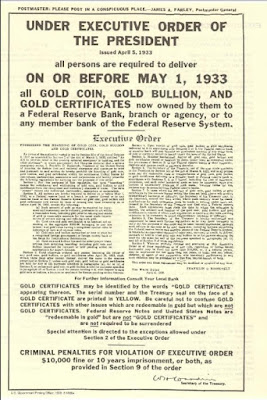
Much of the reason why America grew so quickly was an abundance of land and the California Gold Rush of 1849. The Gold Rush triggered one of the greatest migrations in human history. That also added in today's dollars TRILLIONS in "God's money" aka gold to the financial system. Gold is so powerful FDR actually criminalized the ownership of gold in 1933 via Executive Order 6102!

There has rarely been a better time to purchase or stake a gold mining claim in the United States. With gold trading at $5,000 oz-t. mineral rights on these claims can be worth millions of dollars in gold. Of course one must have sufficient knowledge, capital, and the willingness to work; but the average high school student properly trained, duly equipped and unleashed in gold country stands to make more in a week than an entire summer flipping burgers or mowing lawns.

As the Age of AI dawns upon us, many layers of work will disappear. Vast segments of labor will no longer exist. Promises of utopian society have begun to emerge with Universal Basic Income solving humanity's woes. The reality, however, almost always reverts to basic human nature of self-preservation and survival. Our bet at ILAF is that gold will have a central role in that future of protecting purchasing power, stock up.


Tuesday, December 30, 2025

Material Gains

 Material Gains


The clanging and clunking heard on New Year's Eve might not be just the celebratory noise of welcoming in the New Year, but rather a gathering of silver flatware, old coins, and inherited jewelry not to one's taste. 2025 saw one of the largest material gains in Gold and Silver prices in a generation. And as usual, the best investment, outside perhaps of Founders' Shares in Private Equity, were owning Gold and Silver.

The proverbial "rip your face off rally" in precious metals hinged on a long-simmering desire by large swarths of the population to own physical currency rather than "rag money." Here at ILAF, we have long championed the value of gold as a store of value and hedge against the stupidity and malfeasance of government. In fact, for some time we have tried to garner support for "The Gold Money Act" but to no avail. It is obviously far more efficient to debase a currency made of paper than gold.

Investors should be thinking long and hard about squirreling away KILOS of gold and silver. Given the run-up in prices though, it becomes increasingly dear to purchase on the open market. Fortunately for American citizens, and those intending to become citizens, there is a wonderful piece of legislation passed over 150 years ago called "The Mining Act of 1872" which shockingly is still in existence.

This law allows for those citizens and individuals wishing to become citizens to "claim" the mineral rights on Federal Land (not the land itself, but rather the gold, silver, lithium, etc) on said land for themselves. You read that correctly. It is virtually unknown outside of California, Nevada, Arizona, and Alaska. But the Mining Act is active in all 50 States. No where else in the world does something like this exist: Individuals can prospect on public land and retain ownership of unlimited found minerals.

Why is this important? Well rather than paying the spot price for Gold, say $4500 USD per troy ounce, you can file a mining claim for a couple hundred dollars and then have the rights to prospect (and keep!) for unlimited minerals on that land. For those who want to work, the gold is there. All it takes is some time to learn how to prospect, some basic equipment, the willingness to work hard.


Wednesday, September 25, 2024

Golden Years

 Golden Years


These are not the "Golden Years" of which many Americans have dreamed. Over the past 3.5 years inflation has destroyed ~45% of purchasing power. Proof? In January 2021 gold was fetching approximately $1850 per troy ounce. Yesterday we reached yet another all-time high in the noble metal, closing the day at $2686. So in less than 4 years almost HALF of your purchasing power has been wiped out.

Why does this matter? It provides concrete evidence that there has been wholesale destruction to the purchasing power of the American dollar. The prices in the grocery store, gas pump, and doctor's office are all real, and they hurt. Gold is a great litmus test because governments cannot create it, unlike fiat money like the US dollar. Much has been written of gold on this blog and how it is a physical form of truth.

America needs to move away from a policy of "Tax, Spend, and Regulate" to one promoting creation; ideally this country facilitates growth by a meritocracy of ideas stabilized by the rule of law.  We want the best engineers, scientists, physicians, entrepreneurs, and leaders. The problem with policy failure is that accountability takes at least 4 years at the national level. By that time chaos can reign, but there is hope for creators.

One surefire way to reduce what I consider to be the bane of society, inflation, is to increase productivity. Increasing productivity is a function of treating creators and their capital, both mental and fiscal, well. If that is not an outcome in the coming months, then prepare for gold's luster to shine even brighter. Expect the US dollar to further weaken with increased debt not supported by increased productivity.

Many of society's problems can be both addressed and solved by unleashing the power of productivity. Enable creators to operate in free markets to create solutions. Removing over-regulation facilitates outcomes in the best interest of society because it is the very members of the society who will make economic choices in their own best interests. Choice is the cornerstone of freedom and democracy. 

Ideally capital flows where it is best utilized and not via a laundering system which charges an exorbitant toll to deliver diminishing funds; consider the overhead in the existing income redistribution model. How many hundreds of billions are collected simply to hand out hundreds of millions? Less of the middleman is better for the middle class and nearly everyone else too.  

For the majority of Americans the answers are both simple and obvious; we know what is broken, we know how to fix it, and we know who is accountable. The challenge is can we still get a fair shake at the voting booth to elect leaders who can implement the will of the people? Does the rule of law still exist? Will an unelected shadow cabal run this country? These are the challenges of our Golden Years.


Friday, March 8, 2024

Debt Bomb

Debt Bomb

 
Besides Defense, a stable currency is the best thing a nation can provide to its citizens. The current Administration is adding approximately $1,000,000,000,000 ($1T) to the National Debt every 100 days. This pace is unsustainable because an equal amount of value or productivity is NOT being created along with the corresponding debt. This is how a country is destroyed.
 
Over the centuries many governments have attempted to solve their economic problems by debasing their currency; whether by decreasing the content of gold or silver in coinage, increasing the supply of paper money relative to precious metal backing it, or altogether removing a currency from the Gold Standard. 

Almost always, the debasement of a country's currency has been the result of funding war. War is extremely expensive not only in resources, but also loss of productivity to the warring countries. The larger and longer the conflicts, the greater the hit to the Treasury.

Currently the United States is waging at least three (3) Wars; one in the Middle East, one in Ukraine, and the other one on the Southern Border. The argument could be made that there are also multiple other skirmishes happening 24 hours a day, 365 days a year around the world in which the USA is involved. Putting those aside though, the three major conflicts are costing America vast sums of money. Think in terms of TRILLIONS, not billions.

To look at the stock market or real estate or gold or Bitcoin one would think that this economy is booming. Record highs are being notched daily. There is jubilation in the trading pits. Every month a new high in single family home prices! Yet, just the opposite is occurring with the VALUE of the USD becoming increasingly worthless. As discussed frequently on this blog, inflation has by my estimate destroyed over 50% of the USD buying power over the past 3 years alone. And there is no end in sight.

Barring AI, the major increases in the share prices of many S&P 500 members has simply been a function of increased pricing. Anyone who shops at a grocery store knows this. Or fills up their car with gas. Or pays for health insurance. Or pays for education. Or resides somewhere other than a cozy cave. Truflation© has been running double digits for years. And that compounds quickly.

I have understood the relationship between gold and value for a long time; gold is hard to find, easy to buy, and can not be made by man. Similarly, I also understood that higher and higher stock prices are typically a result of both higher earnings, but also to a large extent, inflation. Same thing for real estate; a classic supply and demand scenario with the added factor of uniqueness. But Bitcoin has puzzled me.

I have come to believe that Bitcoin is a bet. It is a lasting bet against stupidity, greed, and corruption. Meaning Bitcoin, given its cap of 21,000,000 units, should continue to move higher in USD terms indefinitely until some time that sane monetary and fiscal policy is restored...but that day may never come.


Sunday, January 28, 2024

How to Buy (& Sell) Gold

 How to Buy (& Sell) Gold

 
Buying gold as a store of value and protection against inflation seems like an easy thing to do, if you know how to do it correctly. Buying gold is only one side of the proverbial coin though, with selling proving to be the challenge many holders face. Thus, it is important to "begin with the end in mind," because it is far easier to buy gold close to spot price than it is to sell it near spot price.

First, it is important to understand some terms in the gold market. Chief amongst them is spot price. Spot price is the price paid for a certain weight of gold on the global exchanges with New York and London being the primary pricing markets. Gold is almost universally quoted in dollars.

Gold generally trades 24 hours a day, 7 days a week. The vast majority of this trading is via contracts for future delivery of gold. Spot pricing is for a certain moment in time. The spot price also refers to a certain fineness of gold, typically 24K. 

24K implies 99%+ pure gold. Other common measures of fineness include 22K, 18K, 14K, and 10K. An easy rule of thumb to mentally figure out what those different fineness benchmarks mean is to divide by 24K. So for example, 10K gold would be 10/24 or 41.67% gold.

There are many schemes to swindle the uneducated gold buyer out of their hard-earned cash involving spot price, weight, and purity. That is usually done on the selling side, but buyers need to be aware of what they are really buying.

Generally speaking, retail buyers should attempt to buy physical gold in liquid known instruments. That is a fancy way of saying gold coins and gold bars minted by either governments or the handful of private commercial mints.

To get the best pricing a buyer should shop around on several of the largest exchanges, eBay is a good starting point. There you can find hundreds of different sellers, many of whom have their own stores outside eBay. Companies with thousands of positive transactions with decades of experience are generally a safe bet.

Depending on what state you live in, there may or may not be sales tax on gold. In California for example, purchases UNDER $1500 are taxed, while those OVER are not. This is meaningful when you purchase say a 20 gram gold bar for $1450 and another $120 is tacked on for sales tax. Imagine if you were charged sales tax every time you bought a stock!

If you don't have $1500 or more to buy physical gold, or if you don't want to buy physical gold, there are other good options. Multiple companies have sponsored holdings called Exchange Traded Funds. These ETFs store gold in audited physical vaults with each share of this ETF representing a portion of that gold. 

The advantages of a gold ETF are significant. First they are very easy to buy and sell at close to spot prices. Second, you don't have to worry about storage or security for your gold. Third, the sales tax problem goes away. The downside is you don't physically have your gold in hand. There is an old saying in the gold buying world, "if you don't hold it, you don't own it."

Along with ETFs there are gold mining companies whose common stock can be readily bought and sold on most exchanges. This offers investors the upside of owning companies with gold mines. The downside is you have to be right twice; once on gold itself and second (perhaps more importantly) on management of these companies. In the Gold Rush era, it was extremely common for investors to own "feet," or literally the measured foot of a gold mine and be paid on that holding quantity every Sunday in dividend.

Buying coins, bars, and nuggets are all ways to physically buy gold. And generally the closer you get to the source, the closer you get to spot price. Dealers typically tack on a 2-5% premium ABOVE spot. If you contact a miner directly it is possible to get nuggets at up to 10% below spot. A lot depends on who you buy from and in what quantity.

One of the great conundrums of buying gold is that to get close to spot price on the buy you typically have to purchase larger quantities, unless you decide to go the ETF route. The real danger to an investor who has properly sourced a purchase of gold and perhaps needs to sell a portion down the road is SELLING it.

Of all the years I have been active in the gold market I have successfully only sold gold ONCE for above spot price, and that was for a gold bar still inside its protective plastic case. Barring that, you can expect to get a significant haircut SELLING gold; anything from 5-10% (or more!) depending on who you sell to. Seller beware!

Who you sell to is important. There are all types of schemes to lighten your load. They include trying to confuse you with different weights (pennyweights, grams, troy ounces, etc.) Then there is the old acid test where a piece of your gold is scraped against stone and different acids are applied to determine the fineness of the gold. Of course fineness is then called into question.

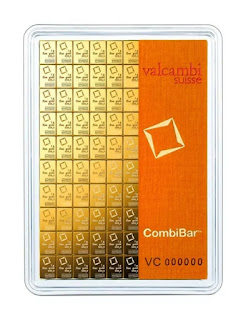
To help avoid these situations, physical gold like 1 Oz U.S. Gold Eagles, 100 Gram Gold Bars, and similar well-known instruments are best. For scrap gold or unknowns, it is almost always best to work with a smelter, but identify ahead of time what your estimated gold content is before a melt. Know the value before you sell!

This obviously is where ETFs have a significant advantage over physical gold. Liquidity is as easy as hitting "Sell" on the computer screen. The ETF shares are sold and funds deposited into your account immediately. Another advantage is that since ETFs trade as stocks rather than actual commodities any taxable implications are also treated favorably. 

As Johnny Cash said, "This world is rough, and if a man's gonna make it he's gotta be tough." The same can be said of the gold market. There still is tremendous friction in buying (and especially selling) gold. Scams and cheats abound, a little of the Wild West remains in every gold transaction. But if you know what you want to buy, can identify it precisely, and "buy smart" adding gold to your portfolio can be a smart move.


Friday, January 26, 2024

Escape Velocity

Escape Velocity

 
"Escape velocity is the speed that an object needs to be traveling to break free of a planet or moon's gravity well and leave it without further propulsion." - Northwestern University
 
As financial farmers striving to build, grow, and ultimately subsist off of our portfolio it behooves us to understand this aerodynamic concept.

As we have discussed many times, the greatest threats to the investor are taxation and inflation. Generally speaking, a financial metric like the S&P 500 will continue to increase in value over time because it is composed of survivors; ie only companies who remain prosperous remain in the index, while losers are dropped or go bankrupt. But even the S&P 500 fights a tough battle against inflation. 

The question investors need to ask themselves is whether real growth is occurring are we simply seeing an increase in prices? Inflation often disguises itself as growth. A superb example is M2, or money supply. Does increasing the supply of money increase its true value? Not if it isn't backed by productivity gains.

Knowing that every dollar is worth less tomorrow than today due to inflation, an investor should seek to capture the value of that dollar sooner rather than later. Over the past 5 years the 3 assets classes which have been able to do that are gold, real estate, and stocks (S&P 500 as the preferred benchmark.)

For the worker who has been saving cash the past 5 years it has been brutal. And for those who have been steadily socking it away for decades even worse. The traditional saver has been inflated out of a good portion of their buying power, some 50% in the past 3 years alone!

In the example above, a spaceship needs enough velocity to escape a planet's gravity well. Velocity in our situation are resources, whether gold, real estate, or stocks. Assets that not only hold their value, but perhaps offer growth potential as well. The "gravity well" can be considered that suffocating burden of taxation and inflation which erodes true value and stifles growth.

The reason we Invest Like A Farmer is to achieve sustained growth over time. That rarely happens by chance. An investor needs to understand the value of their paper money and how best to deploy it quickly as fiat currency apparently has a half life in the current environment of about 3 years.


Tuesday, August 8, 2023

Gold Money Act

Gold Money Act

"The United States Mint founded on April 2nd, 1792, some 231 years ago, is almost as old as our nation. As a bureau of the Treasury, it is responsible for producing coinage for the country to conduct commerce and also responsible for controlling the movement of bullion. It does not produce any paper money. That job is fulfilled by the Bureau of Engraving and Printing. Currently there are four active coin-producing mints: West Point, Philadelphia, Denver, and San Francisco. Legal tender coins of today are minted solely for the Treasury's account."--Largely sourced from Wikipedia

The primer above was to provide the reader with a synopsis of the U.S. Mint. This author hopes to persuade readers of this blog to ask of their elected representatives for the immediate introduction, debate, and passage of a "Gold Money Act" whereby: U.S. Gold Eagles be available for purchase or sale at any FDIC-insured retail banking institution in the United States at current spot gold price.

This legislation would allow Americans to buy and sell U.S. Gold Eagles at current spot gold price at any FDIC-insured bank in the United States. For far too long, many Americans have not had the opportunity to purchase or sell United States Gold Eagles. The nation's gold coinage should be widely available to all.

Gold Eagles, which are issued by the U.S. Mint and assigned nominal values by the U.S. Treasury, are legal United States currency. Yet, currently the only way for most American to acquire or sell the Gold Eagles is via an antiquated network of coin dealers, auction platforms, or pawn shops. It is particularly burdensome for Americans buying and selling small amounts of gold via these methods; they are typically charged usurious commission rates. The Gold Money Act would help democratize the ownership of assets that are already minted and distributed in our country and also provide a fair means of liquidity for all.

I encourage all readers of this blog to share this post with their colleagues, friends, and family in the hopes of getting a nonpartisan piece of legislation introduced and passed which will largely benefit all Americans. Access to gold is a hallmark of a free society. It will also help put to rest a shameful piece of history in which Executive Order 6102 made owning gold in this country illegal.

From almost time immemorial gold has proven to be an excellent store of value, especially so in times of rampant inflation. There is no good reason why Americans can not buy and sell their own currency with ease at any FDIC-insured bank. Let them hear you in the halls of Congress!


Thursday, March 10, 2022

Bear Market Playbook

 Bear Market Playbook


Surviving a Bear Market ain't easy. Obviously the first thing you lose is proper grammar, mainly do to shock of the financial mauling you're getting in the market. First, keep calm. It is highly unlikely you can outrun a bear. The goal here is survival. We're where we're at for a conflux of reasons, none of them good. Now the question is, "How do I position my portfolio to survive, no THRIVE in a Bear Market?"

The first step is to understand what a Bear Market is. It is a historical "rule of thumb" for the past several hundred years which denotes the fall in valuation of roughly 20% off the highs of an index. I'm using the NASDAQ index as my benchmark. The high was 16,212 in Nov 21 and the low (so far) was 12,588 which we plumbed last week. This indicates we are some 22% off the record high and in a Bear Market.

More than just a percentage, a Bear Market also has some very, very "special" traits; ie it feels like you are getting mauled because, well you're getting mauled. Massive volatility spikes cause precipitous price declines (below what we think is even possible), which are often followed by sharp spikes the following day. Only to be succeeded by plunges the following day. And around and around the wheel turns until there is a day or period of capitulation in which the bear has taken everything he wants from you and departs for his cave.

The journey to the cave typically takes about 289 days on average. That's a long time. In that journey back to the cave there are multiple head-fakes, sniffing, foraging trips, digging, biting, and other general uncivilized acts of behavior. Timing the bottom is almost impossible. What is possible is security selection, discretion, and allocation. Investors need to decide if they plan on staying in the game or not, and if so what is a tolerable near-term loss. Booking a loss is painful, but not booking a loss is often worse.

So to playbook this out, figure out what type of loss is tolerable in the near-term. They say your first loss is your best loss, so with that in mind sketch out several "pain bands" and stick to them. After the bear rolls through, along with tons of carnage, there also remain good companies which have been beaten up. You have even previously owned them! Take a look around and start rebuilding slowly, and for God's sake please, please avoid the wash sale rule; don't sell a security and then buy it back within a 30-day window. As an American still kinda free, you have a right to minimize your taxes....part of this means don't get whacked for wash sales.

One of my previous posts dealt with the value of education. Reread that. A solid education often results in a solid job with a corresponding good income. A good income allows you to buy stocks, real estate, companies, etc. etc. during bad times. And a LOT of money can be made in the bad times. Indeed, it is often said "the profit is made in the purchase." That is the true value to an investor that a Bear Market provides; the ability to pick up good brands, companies, and cash flow on the cheap. In fact, a strategy of ONLY buying in Bear Markets is commonly used by investors I term "Mountain Men."

Mountain Men are like the sasquatch, they are only rumored to exist. Typically you don't hear from them for long periods of time until there is a crisis of some sort. Then they spring into action. The Mountain Men come down from the mountain, or in from the jungle or away from the beach with bags of money. These bags of money are then used to purchase quality stocks on the absurdly cheap prices of a fraction of their true book value or growth prospects or leadership value.

The point here is that you need a list, a bag full of money, and the structure in place to buy. We can all have a list. If we have a decent job and live (somewhat) frugally then we can use excess cash to purchase more assets. The structure of course is your brokerage account or retirement account or 401K or personal balance sheet.

Eventually a Bear Market turns into a Bull Market. And those Bear prices rise to Bull levels. And investors who had excess liquid capital available stand to make a killing if their list was good and there cash was deployed correctly. 

Saturday, March 5, 2022

The Case for Gold

 The Case for Gold

Physical gold that can be carried with you or stashed has been the backbone of wealth for thousands of years; hordes of gold coins are still being found in England that date from Roman times! The recent invasion of Ukraine further illustrates the case for gold.

Gold is an ideal store of wealth because it is compact, rare, liquid, valuable, useful, portable, universal, elemental, incapable of being created by man, hard(er) to seize, doesn't rust, and you can stash it almost anywhere.

In contrast to "crypto," in which nearly everything is known about the buyer and seller, where it can be seized almost at any time by any government agency for any reason, and if there is a thunderstorm you potentially lose all access to your wealth, gold offer significant advantages.

There is no better example of the value of gold than the current situation in Ukraine. Millions are fleeing the Russian onslaught and have to leave behind their belongings, real estate, and bank accounts (save what they were able to withdraw at the last minute.) Refugees are literally leaving with the clothes on their backs and whatever they can put in their pockets.

When the grid is down and your crypto is frozen, your AMEX is worthless, and nobody is taking your cash, gold is the proverbial golden ticket out. Physical gold should be a component of every financial farmer's portfolio.
 

Friday, February 4, 2022

Fighting Inflation

 Fighting Inflation


Americans will be fighting inflation for the next 3 years as the Biden Administration is pursuing higher taxation, increased regulation, and significantly more spending without driving growth. These three elements will combine to cause lasting and harmful inflation that stifles the economy. What can you do?

Financial farmers and readers of this blog, like most fighters, don't want to ever get caught on their heels. Most studies indicate the vast majority of Americans are only one financial crisis away from bankruptcy, and typically this ruin is caused by not the loss of a job, loved one, or even the stock market. Rather this "risk of ruin" is directly related to a medical emergency. So rule one: To avoid the greatest risk of ruin, make sure you have medical insurance! If you're a worker, under Obamacare you're most likely paying for multiple people not in your immediate family too. That's just how criminal medical costs have become.

Next, inflation eats away at your earning power and cash value. So make sure your salary is keeping up or exceeding inflation; if the government is saying inflation is at 7% assume it is at least double. So you should be negotiating a 15% raise THIS YEAR to make up for lost buying power. Make sure you get you yours. Amazon is, they just jacked up Prime membership by 17% to $139/year!

Lots of cash sitting in a bank or checking account? Hmmm...well a certain degree of cash is good, no doubt. But are you really losing 1-2% of buying power PER MONTH by having a lot of cash in an inflationary environment? Also who can seize your cash on a whim? (Hint: They take some of your paycheck every month too.) Rule Two: Mind your cash. That might involve old school mattress stuffing or burying. I kid you not. Physical gold makes cents (see what I did there?) to me too.

Finally, what isn't affected by inflation? Nothing. That's right. So look for assets in terms of ownership percentages increasing, increasing cash flow, alternatives to actual cash (it still takes a LOT of effort to mine a troy ounce of gold), and companies buying back their shares all benefit you. Real estate becomes a double-edged sword in the sense that since rates will increase, demand drops for housing. So buyers MIGHT pay less, but their loans cost more. But does a 30-year mortgage @ 3% really matter when inflation is running 7-14%? Seems like a decent bet. Plus you get to homestead and live there. That's nice.

Until inflation is tamed, which I don't think happens in the next 3 years, investors need to be on their toes. Nothing kills work and productivity more than inflation. It is the "silent killer" which reduces the value you receive for labor, innovation, toil, everything. So increase YOUR price and look for assets that pay you to own them. Be wary of leverage. Embrace quality cash flow. Stay in the ring and land some punches!
 

Tuesday, January 25, 2022

Killing Them Softly

 Killing Them Softly


Executive Order 6102 signed by FDR made U.S. Citizen ownership of gold illegal in 1933. This act of tyranny went unchallenged for almost as long as his cousin Teddy Roosevelt's statue stood in front of the American Museum of Natural History. The two men could not have been more diametrically opposite in their policies, yet they were both men of their times. Sadly, it seems like we're reliving the early 20th Century all over again, both politically and socially with a pandemic which follows the Spanish Flu almost cough for cough,  an exit (entry?) into global conflict, and socialism rearing its Medusa head.

Change the dates and change the names and the resemblance is uncanny. Word War I raged in the midst of the Spanish Flu, and the "war to end all wars" finally ended on November 11th, 1918. The Spanish Flu swept around the world from February 1918 until April 1920 (give or take some months, of both sides of that figure.) The mortality rate of the two accounted for some 70 million deaths, of a population of 1.9 billion. Equivalent deaths today would be on the order of 300,000,000. That is a staggering figure. But what happened next in the early 1920s and what is happening today should scare the bejesus out of you.

When there is a vacuum in power, wealth, influence, leadership, ability, morality, etc., etc. it is usually quickly filled; indeed the adage "nature abhors a vacuum" is poignant and precise. Who or what fills that vacuum now is troubling for both financial farmers and more so to the citizens of this country. Just like Executive Order 6102, which made owning God's money, gold, illegal we are seeing a game plan right out of 1933.

If a government wants to fundamentally change the fabric of a society, it kills them softly. A two-pronged approach of utilizing acts of omission and commission works best. The players are on the field and the game has begun, with the first salvo being the most destructive, which of course is an act of omission. Getting something done in Washington is actually pretty hard, even if you are the ruling party. You often don't have the majority and then there is the pesky voting to worry about...but acts of omission? Oh boy, such opportunity!

National sovereignty is probably the most binary political issue there is...either a country has sovereignty or it doesn't, and all natural law flows from that fact. If a country does not have sovereignty, then it is not a nation by definition. It is a group of people who live in a certain geography. There is no border, there is no law inside that border, and there is no enforcement of said law(s). There is no shared value system, there is no language, there is no culture, there is simply of place residence. 

So if you want to dilute or negate the rights of citizens presumably in a nation, you simply ignore the presumption of a nation with borders. That's an easy act of omission that has a massive impact and can be accomplished by doing nothing, yet advances your political goals immensely. But that's just one variable to the final solution of a central government. 

The two other pieces to the "triumvirate" are Regulation and Taxation. Those two can pretty much steer a country to prosperity and freedom or doom and tyranny; although some voting might be involved by elected "representatives," a LOT of damage can be done with a regime fixated on changing the fabric of society via executive order.

Consider, FDR essentially made illegal a basic human right of the pursuit of happiness by outlawing gold as a store of value. This ring especially true today, where the first item on the IRS Form 1040 is a question about "crypto." Another way to regulate freedom is to require disclosure of something, and naturally then to tax it. And was we well know, the more you tax something the less of it you get. Let me say that again; the more you tax something, the less you get.

So less energy production, fewer side hustles, less crypto, less innovation, etc. etc. Ad nauseam. The end result of these polices inevitably less freedom for citizens and more control by the central government. Side effects naturally are the breakdown of society; more crime, more corruption, less enforcement, less good medical care, less good education, less good services in general.

When everything is free, nothing has value. Socialism's grip is tight. It provides government with tremendous control over its population. Just take a look at Australia and New Zealand, which have become de facto police states controlled by bureaucrats who have thoroughly embraced the strategy of "Killing Them Softly."


Wednesday, May 19, 2021

Crypto Meltdown

 Crypto Meltdown


Feels like 1636 all over again today with crypto crashing anywhere from 25-40%+ depending on the "currency" and, as expected by yours truly but apparently not by Coinbase, surging volumes at a key inflection point has taken down the major trading platform. All is definitely not well in cryptoland...at least with the Tulip Bubble you got some nice flowers for the cost of a home.

The problems with crypto are legion. First, it is not cryptocurrency in any traditional sense of the word cryptology...the entirety of the "currency" is easily tracked and this author believes it also can be seized or frozen very, very easily by the state. If the NSA is capable of tracking every conversation and data transmission in and out of the United States, then monitoring cryptocurrency is a piece of cake. But that's not necessarily the biggest problem with this "currency."

Crypto isn't backed by anything, except slave labor in China and fossil fuels (read coal) to mine it and put it into circulation. Once in circulation, crypto is subject to all sorts of tracking and seizure risks. With no physical representation, it lacks true portability. You own crypto at the pleasure of the state.

The best thing that could happen to crypto is happening. It is deflating. Confidence is eroding and its viability is being questioned. Readers of seminal classic "Extraordinary Popular Delusions and the Madness of Crowds" by Charles Mackay will recognize all the symptoms of a bubble in crypto. Shouting from the rooftops "the emperor has no clothes," however, often gets the cryer hung. Mackay said it best when he remarked "Men think in herds; it will be seen that they go mad in herds, while they only recover their senses slowly, one by one."

For thousands of years gold has been used by man as money. It requires toil to acquire from nature. It is rare. It cannot be created by man. It is malleable. It is portable. It feels nice. When it is in your hand you have little doubt what it is. "God's money" has been the basis of civilization almost since creation. True "crypto" is buried in the Earth. I would encourage financial farmers to consider its value to your portfolio.


Monday, March 22, 2021

Tokenization

Tokenization


Tokenization of assets is the springboard of capitalism. Ever since the establishment of the Amsterdam Stock Exchange in the early 1600s, the world's first official stock exchange, capitalism has taken flight and created a system of joint ownership of various assets. This allowed for virtually anyone to own a piece of a company without being personally responsible for its fate, yet this owner could share in any potential upside via an increase in the share price or as the early mining stocks in America proved, dividends from said share(s).

Here at ILAF we are always at the forefront of financial technology and innovation. Well kinda. But as financial farmers with a deep respect for ownership of assets that grow large over time, we would be remiss if we didn't talk about the advent of a *new* kind of financial development: tokenization.

Tokenization is the process of splitting either a real physical asset (such as a car, real estate, or even comic book) or increasingly non-fungible digital assets into identical pieces or shares or tokens of ownership. For all intents, what is occurring is a ledger system which is extremely NON-crypto in the sense that there is no ambiguity as to an asset's provenance. Crypto is probably one of the biggest fallacies of all time; it is eminently clear who owns what, what they paid, and when the item was purchased. Fungible assets, however, have anonymity by definition; think gold, physical paper cash, and oil for example.

One massive market that has been overlooked for decades, save perhaps for the avant-garde, haute couture world that Sotheby's and Christie's have built their empires on...paintings and sculptures. People of a certain generation, for generations, have stored their wealth in art. Primarily paintings. But for the past several decades as the older generations pass on and their collections are broken up and reconstituted by others as the wheel of time turns, a new store of wealth has emerged. Composed primarily of what loves were enjoyed in the past, or what loves where unobtainable in the past, a host of collectibles including classic cars, baseball cards, watches, and comic books have emerged.

Why would the comic book emerge as one of the hottest stores of value? Arguably in 1938 with the publication of Action Comics 1, a new generation of art, culture, and value was created with Superman's debut. Batman followed in Detective Comics 27. A host of other heroes soon joined the ranks. And in the early 1960s as culture itself changed dramatically, Marvel Comics launched the Fantastic Four. In quick succession The Hulk, The Amazing Spider-Man, The Avengers, etc. followed. So began the continuity of a medium that has influenced, often defined, culture for nearly a century. Those early pieces of paper are now worth millions. Perhaps billions. What does this have to do with tokenization? Read on fellow financial farmers.

I was recently introduced to a platform called Rally which has successfully tokenized collectibles into distinct pieces of collectible ownership. The implications of this should be vast, as there are a finite number of old goods...ie there are only so many X-Men 1 graded CGC 9.4 (13 to be exact) available in the world. Granted "new" old collections are sometimes found, but they are increasingly rare. Limited supply of high end goods, regardless of the category, usually prove good for their underlying owners over time, especially if there is consistent demand by a growing population. The item becomes a store of value.

Bitcoin is all the rage in terms of tokenization; but the true unleashing of value, in my opinion, will be in the vast untapped value trapped in collectibles...at least as long as the living generation valuing the assets lives; will a Monet always be a Monet? Only if each succeeding generation values the artwork as much, or more, as the previous generation. Unlike bitcoin though, tokenization of collectibles offers the owners a piece of tangible asset; the value, of course, is always in the wallet of the beholder.
 

Monday, December 14, 2020

Asset Inflation

 Asset Inflation


Headlines abound with terms like "mania" and "exuberance" in regards to recent stock market IPOs, journalists should rather focus on the collapse of the dollar.

With Fed Funds rate at essentially 0% consumers aren't stupid. Money is flowing like lava from a Hawaiian volcano into real estate and stocks (especially platforms.) Why? Well the chart above helps to illustrate approximately 100 years of the dollar's decline. Granted, a lot of things have become cheaper, or weren't even available to purchase a century ago (iPhone anyone?), but some things never change: the flight of dollars into real estate, gold, and businesses has been real.

What does this mean for the average investor? Well the average investor, one who typically does not receive pre-IPO shares or hold significant private equity wealth, is troubling. Given the market's recent spike to all-time highs it can be argued that stocks are frothy. Same thing with real estate. Gold may still offers value, in my opinion, to say Bitcoin.

Bitcoin has eaten up the traditional safe-haven status of gold. Bitcoin is an asset that is easily traceable, easily seizable, extremely tax-inefficient, hard to do business with, and limited in supply to 21 million units. Obviously ILAF isn't a fan.

What is a prudent investor to do? Where else can money be allocated? It is hard to believe bonds or CDs offer anything greater than an arena of cash storage with most likely a real yield that is negative...that's right, you are paying a bank to hold your money. They in return offer you protection on the amount (not the value) of the declining asset. Your opportunity cost is the true victim.

A good farmer, and investor coincidently enough, weighs the opportunity cost in making a decision. The future is nebulous, but the past often provides a looking glass into what has worked in prior situations. Most notably, I would turn your attention to the 1918-1920 time period in global history. The Spanish Flu most coincides with our current predicament.

With 50 million dead in the span of several years, which also coincided with World War I, Spanish Flu could arguably be categorized as humanity's singular worse disaster. Technology has offered some relief today. The world is also significantly more unified in a response (Operation Warp Speed should clearly be the Nobel Peace Prize Winner.) So politically, medically, and financially the "world" has acted considerably more in concert than 100 years ago. If the current scenario plays out similarly to the 1920s (which I think it will) prepare yourself for even more asset price gains...think Roaring 20s all over again, and a baby boom to rival the end of WWII.

Bottom line? After covering your monthly nut for housing, medical, education, etc. turn those remaining dollars into ownership in something more sustainable than cash...real estate, gold, business ownership, etc. Oh yeah, and don't forget to save something for the Big Guy! Trump Tax Cuts are 1st on the chopping block under the new Joe Biden regime.


Wednesday, January 1, 2020

Join the R.I.S.E. Movement!

Join the R.I.S.E. Movement!

Retirement Income Starts Early (R.I.S.E.)


The R.I.S.E. Movement

New day, new year! Have you joined the R.I.S.E. Movement? Retirement Income Starts Early (R.I.S.E.) is a new movement helping people around the world better understand and prepare for financial security. Although tailored to my readers in the United States, the R.I.S.E. Movement's mathematical and psychological principles are universal.

Depending on where you live, however, there are either some distinct advantages or disadvantages to financial security. The R.I.S.E. Movement is most effective in geographies with established rules of law protecting property rights, the ability to own assets, and the ability to migrate with those assets to other regions. Simply put, the R.I.S.E. Movement works best in democracies because they typically allow for the two great advantages of compounding wealth, namely time and owning the asset.

Let's get right into it. For the vast majority of both young and older readers of this blog I have stressed the importance of "Investing Like A Farmer," and by that there are ample descriptions of the value of buying compounding assets. The R.I.S.E. Movement is an implementation of those writings unified into a financial roadmap. There are several key tenants that I think are essential to both understanding and applying to your financial preparation.

First, happiness in life (at least from a financial perspective) is positive cash flow. What is joyous is passive positive cash flow. The ultimate goal of the R.I.S.E. Movement is to help you construct a portfolio with recurring and increasing passive positive cash flow.

Second, the cavalry is not coming. You're on your own in this life in terms of creating this portfolio. It is a bad assumption to rely on a friend, relative, or (gasp) the government to bail you out in time of need. As Johnny Cash once sang "Son, this world is rough. And if a man's gonna make it, he's gotta be tough."

Third, basket weaving is underrated. College students who take basket weaving to help boost their GPA get a bad rap, because not only is basket weaving quite useful it is also quite educational. From a financial perspective, the basket we're weaving is our portfolio. It is composed of many different reeds and together they will form a strong basket to hold our wealth and generate cash flow.

When is the Best Time to Start Saving?

As most financial companies will tell you, the earlier you start saving the better. This is because one of our greatest resources in life is time. The more time you have the more compounding can occur.


The chart above helps visually illustrate the value of compounding interest, that is interest upon interest upon interest ad infinitum. The real "juice" savers get is from the compounding effect of interest. But that chart, however, only tells part of the story. It is based on a single initial lump sum that isn't touched for 20 years. Let's take a look at a little more of a real world example, in which case we start with some small sum of money and then add to it over the years. (Click to Enlarge.) 


Obviously the take-away from contributing regularly over time is that a decent chunk of change can be generated assuming we get a modest rate of return and do not touch the funds thus allowing them to grow.

A HUGE challenge of course is NOT touching the growing asset base. It is virtually impossible, however, for most R.I.S.E. Movement members to accomplish this goal because life, especially over a (hopefully) very, very long time will throw significant challenges at all of us; it could be health problems, education costs, vehicle breakdowns, children, parents, taxation, etc. There are literally thousands of challenges that arise over time which require utilization of our assets. That's the major flaw in most financial roadmaps, there is zero accounting for life itself.

This brings us back to the initial question posed, when is the best time to start saving? The best time to start saving is before you are born.

Weaving the Basket

Starting to save before you are born is difficult, because you don't have many of the educational tools yet to land a job. Obviously I'm writing to all the parents out there. And grandparents. The R.I.S.E. Movement champions independence, but there are significant advantages provided to those starting out in life who are able to leapfrog twenty years into the future. And what I mean by that is nearly every wealthy family has resources put aside for their heirs; whether it is cash, gold, real estate, the family business, etc. in either a Trust Account, 529 plan, life insurance, or other mechanism. The path to creating a solid asset base that can generate cash flow starts early. 

Now for those of you who weren't able to choose your parents or the country you were born in, well there is good news. If you're reading this then you probably have a vested interest in improving your lot in life, possibly to a significant degree. Read on.

As we've already discussed, time is one of the greatest commodities in life. Another one is education. Education allows people to transcend from their existing condition. This can result in a better job. A better job typically means more salary. That's a good beginning. With a decent salary excess income can be applied to building your asset base. Depending on how good of a salary, you can then start compressing time.

Wait, did he just say "compressing time?" Yes. The more excess income (income that exceeds your cost of living expenses) you have the more assets you can purchase. What is an asset anyway? An asset is something that pays you to own it. The world is full of assets just waiting to be purchased! There are dividend paying stocks, small businesses, real estate, mining claims, etc. The list goes on and on and on.

Whether young or old, there are certain tips I'd like to share in regards to "weaving your basket." Just as a little can be turned into a lot over time, the inverse is also true...namely a lot can be turned into a little quickly. The construction of your basket is going to be unique for almost all of us, but there are common elements to success. 

Create moats. By that I mean have different types of assets which are not correlated, not held in the same place, and are secure. For example, "diversification" isn't just having an Index Fund. Consider owning dividend paying stocks, bonds, real estate, gold, and a small business. Together they form a sturdy basket to hold the totality of your asset base, yet are not held in the same place. 

No single event should (or could) destroy your basket. Barring a meteorite or health pandemic of Biblical proportions, your basket should be able to withstand the test of time and what life has in store for you. See the paragraph directly above regarding creating moats. Chain reactions can be very, very nasty. Having liquidity on hand is a good thing (think cash money.)

Building a castle or a spaceship or a robot starts with one Lego. Remember that. Young or old we all have a certain amount of time left, act accordingly. Buy assets. Live. Add to your assets. Live. Buy more assets. Live. Use income from assets to buy more assets. Live. Get more education. Live. Use excess income to buy more assets. Live. Teach others. Live.


Your Future Starts Today

In the preamble of this post I mentioned that the R.I.S.E. Movement was tailored to my readers in the USA, but applicable to readers around the world. Each country will have its advantages and disadvantages in terms of educational opportunities, health care, and freedoms.

Generally speaking, the greater the educational opportunity, better the health care, and more freedom one has the greater your ability to harness all the facets of the R.I.S.E. Movement will be over time. Luck and hard work, however, can and often do trump many of the advantages of living in a democratic country with wealthy parents, opportunities for education, health care, and fundamental freedoms. If you have the self-discipline and motivation to harness the power of time you can compound opportunities.

Tuesday, November 15, 2016

In Gold We Trust


     With the election of Donald Trump as President, the United States has voted to put in power a pro-growth, pro-infrastructure leader who has vowed to make significant structural improvements in America's roads, bridges, highways, byways, airports, tunnels, schools, hospitals, and walls...all of that takes money. Almost by definition, big spending booms in infrastructure correlate with inflation. From a gold buying perspective we are almost in a perfect storm; the U.S. Dollar has rocketed in value versus a global currency basket while gold has fallen in value nearly 10% since the election due to the "fear" trade dollars flowing into the stock market. Buyers of Gold in U.S. Dollars betting on big government spending on defense, healthcare, and most poignantly infrastructure now looks like an ideal time to add to your hard physical Gold holdings.

Sunday, November 6, 2016

Yogo Sapphires


Pictured above is the Tiffany Iris, constructed primarily of Yogo Sapphires which are mined only in the Yogo Gulch, MT (USA) and boast the purest untreated sapphires in the world. I'd encourage readers of this blog to follow the Wiki link embedded and learn about these awesome stones. It is an interesting lesson for investors to consider: the value of these "worthless tailings" ultimately became worth far, far more than the actual gold that was being sought at the mine.

Tuesday, August 16, 2016


     The four pillars of wealth have remained constant over time; Stocks, Bonds, Real Estate, and Gold. Barring the use of fiat currency, i.e. cash, for intermediate transactions, the world's wealthy have consistently built, stored, and extracted their wealth from those four pillars. Go and do likewise financial farmers; the means and methods vary, the intricacies differ, and the medium may change, but make no doubt about it, those pillars have remained constant bastions of wealth over time.

Sunday, June 26, 2016

The Case for Gold


One of my favorite asset classes is Gold. Old Element 79 is pretty interesting for many reasons; it is highly ductile, an extremely good conductor, and it has proven exceedingly difficult to create or destroy over time. But probably my favorite characteristic of gold is that it has been intrinsically linked to stored human toil (value) for over 5,000 years. In fact, Warren Buffet's father in 1948 wrote an excellent piece on this very subject. If you read one thing today (besides the ILAF blog of course), I highly recommend Howard Buffet's speech to Congress entitled: "Human Freedom Rests on Gold Redeemable Money."

A company I recommend and personally use to buy and store Gold for a flat 1% of spot pricing is aptly named Goldmoney. You can chose where you'd like to vault your gold and it can be redeemed for physical gold on demand. They've essentially reinstated the Gold Standard after an over 80-year absence.

As the world watches the Olympics in Rio this summer and the economic fallout from the United Kindgom's Brexit vote, it is interesting that once again all eyes are on timeless Gold as the metric of excellence and value.

Friday, June 24, 2016

Brexit


The United Kingdom becomes the first member of the European Union to voluntarily leave the group as a historic referendum pitted pro-EU loyalists against a rising wave of voter angst upset with being marginalized socially, politically, and economically from globalization. Last-minute attempts failed to unite the country and voters choosing to leave came in strong numbers.

The initial effects have been a massive sell-off in the global stock markets, with Asia, Europe, and the United State all down significantly. Almost every currency also fell against gold which enjoyed its best day in years, hitting a 2-year high in the wake of the Brexit vote.

Going forward the implications are ominous in that the EU itself may now face additional countries determined to leave. Time will tell, but the referendum results don't bode well for traditional establishment candidates and polices throughout the world.