Showing posts with label GDP. Show all posts

Thursday, December 8, 2022

Speed Brake

Speed Brake


If ever there was a speed brake on the economy, it is the ironically titled "American Rescue Plan." The keystone language in this travesty of a Bill is the issuance of 1099-Ks for "transactions totaling a cumulative of $600 per year." Think about this for a moment. What better way to kill small business, prevent new business, and ramp up the police state than searching for needles in the haystack? Meanwhile, the barn door is wide open out back with government spending giving drunken sailors a good name.

Similar to the laughingly false "Inflation Reduction Act," which promises to reduce inflation by spending more, the "American Rescue Plan" aims to HELP Americans by raising their taxes, lowering taxable thresholds, and adding 87,000 more enforcement agents to "help" them. Cue up the Ronald Reagan quote of the nine most dangerous words in the English language: "I'm from the Government, and I'm here to help."

Let's get serious people! As readers of this blog well know, we are big believers in the Laffer Curve. This economic principle illustrates that there is a strong relationship between taxation and tax returns. As so elegantly illustrated above, when you squeeze the lemon too much you don't get more juice. In fact, you get less juice.

Consider for a moment the contribution of Small Business to the American Economy. Small Businesses account for two-thirds of new jobs and half of all existing jobs. The Small Business sector generates almost HALF of this country's GDP.  So what happens when the jackboot of government is on the throat of Small Business? Well, nothing good happens. Productivity crashes. Output contracts. The lemon shrivels up.

There is little doubt this has been a coordinated effort to reallocate capital. Congressional bills don't write themselves. They are typically written by lobbyists paid by special interests. So if Small Businesses are the losers, who are the winners? Winners would be those who typically don't need or have a Small Business or side hustle. They would be those with local, State, and Federal government jobs, labor unions, and big business executives. Collectively 15% of the population will seemingly reap significant benefits from the other 85%, but there is a flip side to this coin.

To have Government welfare programs and an expansive state, it is first necessary to have a thriving economy. Not many people know JFK passed some of the largest tax cuts in American history. He knew that a thriving economy is based on a free-market with light regulation. Light regulation does not mean no regulation, ie bad actors like Samuel Bank-Fried and the beneficiaries of his largess need to be held to account. The French coined this approach best with the term "Laissez-Faire."

What is an investor to do? Until there is a regime change, investors not plugged into the political gravy train need to stay in their foxholes; consider dividend paying large companies with monopolistic pricing power and brand recognition. If their products are vital or addictive, so much the better. The landscape for startups is barren as the moon, never mind Mars. Raising capital in an increasing interest rate environments during a recession is pointless. Cash in this environment sits in risk-free Treasury Bills.

When the Laffer Curve is ignored, or even mocked, and a turn is taken into a socialist regime then the capitalist must look for safety, income, and muted growth until an opportunity emerges to make a move into pro-growth, low-tax, and economically sound policy. It might be a while.


Tuesday, July 19, 2022

One-Two Punch

One-Two Punch


Americans have been economically knocked out by their elected leaders. The Wayfair decision and American Recovery Act language stipulating a Form 1099-K for transactions totaling $600 or more effectively acts as a one-two punch. When did we vote to join a Fight Club?

In the words of noted U.S. attorney Jackie Chiles, it is "outrageous, egregious, preposterous" to pay elected members of Congress to knock us to the mat. Enough is enough. This author believes Wayfair was the single most harmful Supreme Court decision in a generation. Consider the rationale.

When basic freedoms are destroyed or restricted, it leads to the rise of juggernauts that monopolize the respective industries; whether they are natural resources, air travel, or in this case internet commerce. And internet commerce is huge...literally hundreds of billions of dollars of goods and services flow through those fiber optic cables on a daily basis. Every. Single. Day.

They say people get the government they deserve, but we don't deserve this...the problem arises that there are two (possibly three) sets of standards; one is the citizen taxpayer who is treated like dirt. Then there is the elected officials. They treat themselves well. The third is the true constituency. Now a rationale person would ask "Isn't that the citizen taxpayer?" Theoretically, yes. In reality, the true constituency is corporate America (think S&P 500 constituents) and pandering to special interest voting blocks.

Sadly what arises is the decay of the foundational Constitutional values AND rights. Citizen taxpayers get a watered down Slushie while the political machine feasts. The solution? One is to vote them out. That is very, very difficult in states like California with a majority rule impervious to reason or accountability. Another idea is to vote with your feet. That option is not available to everyone, but most people who can, do. Finally there is the "moat" strategy. This idea involves creating an economic and social moat by capturing enough value in your life to protect your family from your very government.


Thursday, February 17, 2022

Freedom Index©

 Freedom Index©


The Freedom Index© is the inverse ratio of the percentage of GDP spent on government annually. Currently the reading is somewhere between 45-70% of your God-given freedoms, depending on where you live in the United States. No wonder Elon Musk is fighting the SEC.

It is a sad state of affairs when the Thomas Edison of our generation has to SUE his own government for chilling his basic civil rights. Instead of unleashing innovation, the Biden Administration has made a point of trying to crush it. How did we get here?

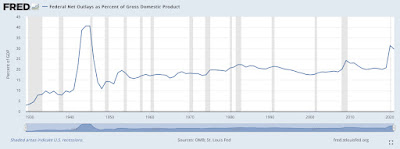
There has been a steady decline in basic civil rights for over a century, and it can be tied directly to the rise of the Income Tax and IRS. Once the government gained the power to tax it never stopped, because your tax dollars are its nutrients for growth. Hence we have witnessed a stunning growth in the size and scope of the government. Consider the historical chart below:


The Federal Government spend now is over 30% of our GDP. Combine that with State and Local spend and we're easily approaching 50%+. Why does that matter? Well as government grows, your freedoms erode. Sadly, the Founders knew this would happen. That is why they kept government small, knowing that it is inherently corrupt. Consider, since 1930 when Fed Spend was about 5%, you had essentially 95% of your freedom. Now it is less than half. And in many states like California it is worse. "The State" has become all.

Can this be fixed? That is a difficult question. President Reagan famously once said: "The closest thing to eternal life on earth is a Government Program." How true it is. Much of the problem lies with our elected representatives who do not represent us. They represent themselves and their lust for power. Change begins with voting them out, demanding term limits, and creating a task force to reduce regulations and simplify taxation. Yes, a task force to REDUCE government. We should not be the best country for political corruption and accountants, but rather for engineers, scientists, and poets.
 

Wednesday, November 29, 2017

Position to Win

Position To Win


The Darwinian battle for survival has a lot to do with EXCEEDING the Jones, rather than just keeping up with them. Traditionally what has been a pillar of the American Dream is the belief that one's children will have a better life; better education, access to opportunities, health, etc. Indeed, it was John Quincy Adams who remarked that "I am a soldier so my son can be an engineer and his a poet." How does that translate in today's society?

Reality dictates that to achieve this goal of a progressively better life for ourselves, our children, and their children one major accomplishment MUST be achieved: growth. By definition, the Earth has limited natural resources, and as humans our time is probably the most valuable resource. Along those lines, maximizing time (surviving) is paramount to achieving growth. And there is a very specific definition of growth I like to use fellow financial farmers: making sure your portfolio is growing consistently in EXCESS of true inflation...which I estimate is easily in the double digits.

Double digits? How could this be? The Federal Reserve is HOPING that their metrics indicate "inflation" rises to 2%. Please take a look at the chart above illustrating historic real wage growth and notice something really, really nasty occurred around the year 2000. That's essentially when the internet really began to take off, and was quickly followed by major world events including a massive recession and multiple global wars. The global economy's PRODUCTION has more than recovered in the nearly two decades since, but the real wages haven't....and neither have the jobs.


Real wages have remained stagnate and U.S. manufacturing jobs are at 1941 levels. Explosive growth in productivity hasn't benefited the typical line worker at all. The number of jobs has collapsed and compensation long associated with those jobs has vaporized...it has been replace largely with the rise of a massive service sector dubbed The Gig Economy. The problems with The Gig Economy are legion; no pension, limited healthcare options, and low wages. Where is all that "productivity" i.e. prosperity going? To the owners of said businesses, who are typically either private equity concerns or publicly traded companies both of which have founders with stratospheric wealth.

So how you do position to win? First, throw out the 2% inflation dictum championed by the Federal Reserve. Second, put a personal growth plan together that targets a sustainable, LARGE growth rate in excess of your true inflation (cost of housing, healthcare, education, etc.) Third, implement said plan. There are multiple industries with stratospheric growth...I know where they live, and so will you after some research. Give me a call if you need help finding them. Look at those industries and professions intensely from both an employment perspective and ownership mentality. The future remains very bright for those pursuing ownership interests that are laser-focused on generating cash flow...and there's nothing to say you can't love what you do and benefit the world while you do it. If you want to position yourself to win big-time, formalizing a growth plan and executing it are essential...Invest Like A Farmer.


Wednesday, November 9, 2016

Complete & Utter Repudiation


     The American voters have spoken, and they have completely and utterly repudiated the Obama and Clinton big government ideology of a nanny state infringing on personal rights, choices, and decisions. This is a victory for the Republic as a whole as history will soon begin to illustrate. In the coming weeks and months changes to the tax code, Supreme Court, and health care industry will have far-reaching and liberating effects for Americans of all walks and stages of life.

     From an investment standpoint, a Trump presidency offers the opportunity for large corporations to repatriate several trillion dollars back into the United States at a proposed flat tax rate, lowering of the corporate tax rate to 15%, lower of personal income tax rates for Middle Class Americans, restructuring trade deals, rebuilding the infrastructure of roads, bridges, and transportation hubs. In addition, both biotech and the defense industries stand to benefit as the free flow of capital returns to innovation. These are several of the many proposed economic improvements that the Trump ticket has focused on during his campagin. 

     The net effect to average Middle Class American should be an increase in real wages, job security, national security, opening of educational opportunities, and rebuilding of the core physical infrastructure and health care systems. Long live the Republic.

Wednesday, June 29, 2016

How Does Your Retirement Cashflow Stack Up?


Projected GDP Per Person over the next 5 years through 2020 gives an idea of what the average citizen in each of the following countries makes (either passively or actively) in income. Great snapshot of where investors should be targeting their returns in terms of local fiat currency. Interesting to see the effects of inflation even over a short amount of time in regards to estimated cost of living. Inflation is the enemy that never sleeps.

Friday, August 7, 2015

Earnings Beat…Stock Sell-Off


Nothing like the sound of the Fed starting up its interest rate machine to destroy the gains in the stock market…as the 2nd quarter of earnings releases are announced, and approximately 90% BEATING estimates, one would surmise that this market would have taken off. Heck, historically years ending in 5 which are the last year of a lame duck presidency are the BEST…but alas it is not to be the case.

The flu started with the infection of Google which completely destroyed earnings (hey, it's great to be a total and utter monopoly and control the fate of the internet…that pays handsomely) to the upside. After crushing earnings and spiking some $60B in market cap during a single day, Wall Street lined up like a pack of hyenas for the next killing…Apple. That didn't turn out too well; over the past 2 weeks the largest public company on Earth gave up nearly 20% of its market cap. Facebook and Twitter would save them, right? Not to be. Billions more lost the following trading days. Well surely blue chips like Disney wouldn't disappoint? Scratch that; because beating is no longer beating if the current trading cartels can justify after a call (in hindsight naturally) what was wrong in a beat. We're seeing any excuse to sell. Case in point, start-up Fitbit nearly quadrupled earnings yet is off some 25% since their announcement. Benjamin Graham said it well, "…in the short term the stock market is a voting machine." 

The list goes on and on, but the trend has taken place; biotech broke and the majority of tech got whacked too…the blue chips followed and underpinning all of this is a compete collapse in commodities.

Barron's had a great piece on commodities versus GDP growth…it wasn't pretty. If investors are to put stock in their article lower and lower commodity prices signal the end of robust growth.

In short order the most powerful (and unelected) person in the world, Fed Chair Janet Yellen will almost certainly raise the Fed funds rate.  The data and rhetoric has been too strong not to make a move now.

Recent results we've seen globally are, unfortunately, I believe, a precursor of what is going to happen over the coming months as global growth stalls, the Fed raises rates, and investors cash in significant gains accumulated since the last recession in the hopes of buying even lower. And lower. And lower still.

Probably a better idea to wait until there is not only clear inflation, but several sustained quarters of it before raising the Fed funds rate; cutting the fuel and pulling up the stick isn't a good combination.

Monday, February 2, 2015

2015…the Year of P/E Compression?


What if revenues continue to rise AND profits similarly increase in 2015 yet stock prices remain stagnant (which, based on the January 2015 close is looking like a likely scenario), well then I believe we will have a classic case of Price-to-Earnings compression. Similar to a spring which is compressed by force, the dynamics of the stock market work in a similar, if not identical process, to the linear compression of a spring.

Over time increased revenues which translate to higher and higher earnings have typically reflected their respective advances in increasing stock prices.

When this trend deviates it is typically an abnormal movement in the traditional relationship which generally results in equilibrium (price appreciation) being restored at some point.

The question always, is when? When does the spring bounce back? If indeed GDP is slowing (possible, but with oil's fall it should remain strong), then we can expect the typical bounce back to occur when that point of "tensile" strength (i.e. greed) overwhelms the compression of earnings.

Historically this has been a rapid fulfillment of missed bounce. With nearly all the economic factors lining up in favor of increased GDP, low interest rates, low gas prices, lower manufacturing costs, increasing home values, and decreased unemployment we are in the midst of a great revenue cycle. 

In the short term stock prices may remain "unsprung," but over time the reflection of increased corporate profit should translate to a significantly higher market.

Monday, December 22, 2014

Oil's Fall


From June 19th's high of $115.06 per barrel, we've seen oil fall over 50% to $55.26; this is probably the most important financial news of 2014.

Assuming we don't see a "V" recovery in the price of oil, and I think it is highly unlikely we will because supply to the market is significantly stronger than demand, this should bode EXTREMELY well for consumers, manufacturers, and transportation. A glut is nice is you're a price taker.

No doubt there has been carnage; just take a gander at any number of the North Dakota small to mid-cap plays and those charts are simply horrifying, especially for investors who had been purchasing on the entire way up. The global players though, have suffered glancing blows. Down single to low-teens, the majors stand to benefit if they can leverage M&A deals out of this bust to gobble up domestic fields.

Previous posts on this blog identified the fall in oil as a massive tax cut; that is without question true for the vast majority of Americans who regularly drive anywhere or own small businesses with light manufacturing or are dependent on transportation. From a macro view, the "trickle up" effects should be significant to large manufacturers' direct bottom lines (unlikely consumers will realize a price cut in the aisle, that's for sure!)

Ultimately, the crude bust should have meaningful effects on GDP, consumer sentiment, and socioeconomic advantages inclusive of a better hiring environment. What politics has often failed to do, a crude bust just did.

As a financial farmer there are a multitude of looming advantages; the labor rate, harvest and planting expenses, and seed cost will be all lower. Net positives all around to those who wish to Invest Like A Farmer. This should position 2015 & 2016 into meaningful extensions of the existing bull market. My long-standing call of Dow 20,000 by the end of 2016 may now be too low.

Wednesday, December 3, 2014

The Oil Boom (for the Rest of Us!)


Welcome to QE4; $65 bbl oil! Nothing like cheap oil to help a financial farmer's portfolio. Consider rough "back of the envelope" numbers of 0.25-0.50% GDP increase for each $10 bbl oil fall from $100 bbl oil and we're looking at some very rosy numbers indeed.

Frequent readers of this blog know that I've had a Dow 20,000 call on the market for well over a year, specially I'm predicting Down 20,000 by the end of 2016.

If we see sustained oil prices below $65 bbl, well my friends, that would imply S&P 500 earnings of around $1250 forward looking into 2016 and even a moderate P/E of 18 yields…wait for it…Dow 22,500. That's nice.

The fall in oil prices is in effect a MASSIVE tax cut across the board for: gas-car drivers (still plenty of them around), raw material consumers (read as nearly every major non-financial S&P 500 component), and secondary iterations like logistics, transport, and fulfillment.

What's very strange about this existing scenario is given the turbulence in the Middle East many investors would expect $120 to $140 bbl oil right now. Why aren't we seeing this? Two theories come to mind; first, somebody is dumping large quantities of crude on the market at cut-rate prices to raise significant capital. But even that theory wouldn't account for the global sell-off, it's just too amazingly big a move. If we look to classical economics with our good friend Adam Smith, then supply and demand should tell us everything; bottom line there is a glut of oil with middling sustained demand.

Combine the oil QE4 scenario with a dovish Fed poised to keep rates low indefinitely and low inflation (except in health care and education, but why measure those when "tons of soybeans" is available?) as well as a political environment almost guaranteeing gridlock and we're sitting on the heels of another bull run higher.

As the end of the year approaches, this sure looks like a fine time to take stock of your financial farm and adjust allocations accordingly. A quick refresher for new readers of this blog:

Rapko's Rules

1. Boring is undervalued. Look for companies with established brands. If they are exclusive, finite, hard-to-get, vital, addictive, and/or monopolistic, so much the better.

2. I prefer companies that pay me to own them. Specifically, I want to buy companies that pay quarterly dividends that have historically risen over time.

3. Of the four possible outcomes; high margin, high volume is best.

4. A steadily moving higher and higher left to right stock chart is a good thing; the inverse it not.

5. Inevitably, and by definition, more time is spent holding a losing position than is necessary. Cut your losses.

Monday, October 14, 2013

Batten Down the Hatches!


One of my favorite Wall Street books is The Greatest Trade Ever which chronicles a group of traders who had the foresight, capital, and luck to both predict the fall of the mortgage market and trade on it. They all bet against the sustainability of the mortgage security market in one form or another (mainly through derivative contracts); they were all successful because despite the proverbial writing on the wall, no one else was betting that this could ever happen. I think we're in a similar situation right now.

As financial farmers we want to Invest Like A Farmer for some very practical reasons, a really good one is not to go broke. This is what is referred to as the risk of ruin. There is one goal that is paramount to every farmer; avoid ruin. This simple goal, frequently overlooked or ignored, bears repeating: Avoid Ruin.

Young or old, we all have different tolerances to risk. We should pay particular attention, however, to the risk of ruin. Broadly defined, the risk of ruin is the point of no return, that place or situation you've reached where your finances, and in particular, your farm is bust. You can't squeeze another nickel from the fruit stand. All your other options are seemingly impossible as well. Essentially there is no way out. Amongst the farmer's many concerns, the risk of ruin must always run paramount. Losses can be sustained, opportunities missed, leverage overdone, and a host of any other problems survived, but we want to avoid ruin at all cost.

Ruin can be devastating and possibly unrecoverable. For those who have clawed their way back from the brink it can be a valuable life lesson, but I've never heard it described in terms of nostalgic fondness. With full respect to Nietzsche, who wrote: "that what does not kill me, makes me stronger," ruin is painful, and regardless of your age or circumstances, the true financial farmer wants to avoid the risk of ruin. It is far too celebrated amongst the entrepreneurial elite who have never tasted true ruin; they had and have back-up plans and resources that are never revealed. Keep your farm well-tilled, planted, and enjoy every harvest even if it is at first meager. Your goal should be a lifetime of sustained financial farming, a lifetime.

A lifetime of farming is sustained by not being overextended even when everyone claims we (the USA) could never default. October 17th is fast approaching, but that date doesn't necessarily scare me. What I'm concerned about is the process that led up to this point, and in particular November 1st. The tax revenues are in place for continued short term operation, but beginning on the 1st we have significant outlays; I truly wonder as a country if we're ready to have a hard conversation of what we fund and what we don't. Do we pay the debt obligations, do we pay Social Security, Medicare, the military?

I maintain the prediction of a 50/50 chance of default; at this point every financial farmer should have cash on hand as well as either a fully or partially hedged portfolio in the event of October 17th passing without a deal. In the event of a deal getting passed, I suspect it would be a short term extension at best and ultimately we'd still be left with the same systemic problems in the federal budget. The "good" news, regardless of whether a deal is cut or not, I don't see any possible chance of the Federal Reserve tightening monetary policy; not at the next meeting, the one after, or even well into 2014. The economic recovery is still too nascent and obviously there are far bigger political problems that need to be solved. The two charts below help illustrate the challenge this country faces ahead; how do we bridge the spending and revenue gap while sustaining our yearly outlays?